
How Do We Diagnose STIs With Lab Tests?
Sexual health is important, and STI tests are key in maintaining health. Learn about various STI tests in this overview.

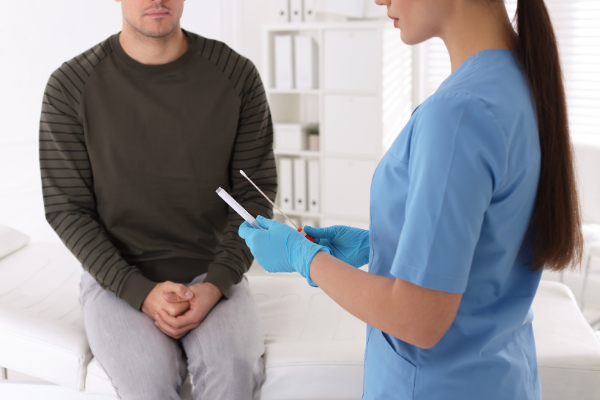
Sexually transmitted infections (STIs), also called sexually transmitted diseases (STDs), are infections that spread from one person to another during sex.
Sex is fun and intimate way to connect with someone, but it also has risks. With the right precautions, you can find a balance between risk tolerance and personal enjoyment. With the right testing, you can keep yourself and others safe through early detection, treatment, and prevention. Keep reading to get answers to your lab test questions on STI tests.
What STIs Can Be Detected With Lab Tests?
Chlamydia, gonorrhea, trichomonas, and many other STIs are detected using nucleic-acid amplification tests (NAATs). NAATs are fast and reliable. Testing can be completed in less than 24 hours with high specificity and sensitivity. Chlamydia is detectable in 5-14 days and gonorrhea is detectable in 5-7 days after exposure.
Syphilis testing is a two-step testing process: a screening step and a confirmation step. The bacteria cannot be grown in a lab or detected directly, so medical laboratory scientists look for two types of antibodies against the T. pallidum bacteria (treponemal) and non-specific antibodies from host cell destruction (non-treponemal). It generally takes 3-6 weeks for antibodies to show up positive in syphilis testing.
Testing for HIV is also a two-step testing process, using a rapid antigen/antibody or antibody only screening test followed by an immunoassay or NAAT for confirmation. Different test methods have different windows of detection:
RNA: 10 – 14 days
Antigen-antibody combination: 18 – 45 days
Antibody only: 23 – 90 days
Herpes Simplex Virus (HSV) is not included in STI screening because of high prevalence in humans and low clinical utility of testing. HPV is also not a part of routine STI screening. Testing for less common microbes such as Ureaplasma and Mycoplasma bacterial species are also available but may not be covered by insurance.
Why Is This STI Test Being Ordered?
STI testing is ordered as part of routine sexual health or after possible exposure. Most STIs are asymptomatic, so there’s no way to look at someone and know if they do or don’t have one. The best way to know your exposure risk is to discuss STI status with sexual partners before having sex.
There’s no set schedule for STI testing. For people who are sexually active and want to monitor their STI status, it’s recommended to get tested every 3-6 months. More frequent testing, up to every 2 weeks, may be needed for people who are immunocompromised, have a high number of sexual encounters, or accept payment for sex.
How Is This STI Test Ordered?
STI testing can be done through primary care offices, urgent care centers, telehealth services, sexual health clinics, and community health centers. There are also direct access testing options such as at-home testing kits and direct-to-consumer services that offer additional privacy and convenience.
Be sure to specify which STIs you want to test for and the body areas to collect from at the time of ordering tests for lab test reports. HSV, HPV, and hepatitis viruses are not routinely included in test panels. Not all ordering providers will know which collection sites to include unless explicitly discussed.
How Should You Prepare for the STI Test?
The types of specimens collected for STI testing depend on what tests are ordered and the areas being tested (genitals, mouth, or rectum). Samples come from urine or swabs of the urethra, cervix, vagina, mouth, or rectum. Blood tests are used for syphilis, HIV, and most viruses.
You do not need to be fasting for STI testing. The only consideration is timing, where testing too early can lead to falsely negative test results.
Biotin supplements can cause interference with many immunoassays. If you’re currently taking biotin, stop at least 72 hours before going to the laboratory for specimen collection.
If you are getting tested after a recent STI exposure, abstain from sex until you receive negative results or after successful therapy for any microbes detected. Contact all recent partners, letting them know you’ve had an exposure, so they can get tested as well.
What Do the Test Results Mean?
If the lab test results are negative, the test did not detect signs of infection from the specific microbe. Results may be negative if testing is done too early. If you receive a negative test result and are still concerned or experiencing symptoms, retest in 2 weeks.
A positive test result means that the microbe is present in the body. Tests that have a screening step with a positive result must be verified using a more specific confirmatory step.
Questions to Ask Your Provider
· What STIs are being tested?
· What areas of the body will be tested?
· What treatment options are available if the result is positive?
· When should I be retested?
Final Takeaway
Some communicable diseases are spread during sex. Good sexual health practices include regular STI testing, talking about STI status before having sex, and using protective barriers.
STI testing is widely available through healthcare providers, at-home kits, and direct-access laboratory services. Testing done too early can cause falsely negative results that should be retested at a later time, typically 2 weeks to 3 months later.
Having an STI is a medical condition, not a flaw of personal character. By knowing and communicating about STI status, you can be confident in your decisions and help others make informed choices free of shame or judgement.
References:
Fisher R. STD Testing Timeline Chart: Exactly When to Test for Every Common STI. https://www.stdtest.com/std-testing-timeline-chart/. Accessed Aug 31, 2026.
Ghanem KG, Tuddenham S. “Screening for Sexually Transmitted Infections.” UpToDate, edited by Jeanne Marrazzo and Allyson Bloom, Wolters Kluwer, 13 May 2026, www.uptodate.com/contents/screening-for-sexually-transmitted-infections. Accessed 31 Aug. 2026.
Diagnostic Equity Resources
Understanding Lab Test Results: A Comprehensive Guide to Taking Control of Your Health
Do Complete Blood Count Reference Ranges Differ Globally?
URL: https://diagnosticequity.org/knowledge-base/do-complete-blood-count-reference-ranges-differ-globally
What Are Hemoglobin and Hematocrit?
URL: https://diagnosticequity.org/knowledge-base/what-are-hemoglobin-and-hematocrit
Decode your lab test results: Get lab test questions answered about your lab test report.
This information is not a substitute for, nor does it replace professional medical advice, diagnosis, or treatment. If you have any concerns or questions about your health, you should always consult with a healthcare professional.